
Composite decking has become one of the fastest-growing choices for homeowners across the Central Coast, and it's easy to see why. Between the region's salty sea air, humid summers and love of low-maintenance outdoor living, more and more properties in Terrigal, Umina Beach, Erina and beyond are turning to composite boards instead of traditional timber.
As local carpenters who install both timber and composite decking across the region, we've put together an honest breakdown of where composite decking shines, where it falls short, and what local Central Coast Council rules mean for your project.
What Is Composite Decking?
Composite decking is manufactured from a blend of recycled wood fibres and recycled plastics (typically polyethylene), engineered to replicate the look of timber while offering greater resistance to moisture, insects and UV damage. It's sold as capped or uncapped boards, with capped composite offering an extra protective outer layer for enhanced weather resistance.
The Benefits of Composite Decking on the Central Coast
1. Built for coastal, humid conditions The Central Coast's climate is classified as humid subtropical, with warm, humid summers, evenly distributed year-round rainfall and persistent salt exposure in beachside suburbs like Avoca Beach, Copacabana and The Entrance. Composite decking is largely unaffected by moisture, meaning no rot, no warping and no swelling — a genuine advantage over timber in our conditions.
2. Minimal maintenance Unlike timber, composite decking doesn't require sanding, oiling or staining. An occasional wash with soapy water is generally all that's needed to keep it looking good, which is a major drawcard for busy households or holiday homes that sit empty for stretches of time.
3. Excellent durability and longevity Composite boards typically come with warranties of 20–25 years and resist termites, cracking, splintering and fading far better than untreated timber — an important consideration in the timber-pest-prone bushland fringes of the region.
4. Consistent appearance Because composite boards are manufactured, you get uniform colour and grain across the entire deck, without the natural knots, warping or colour variation of solid timber. This appeals to homeowners after a clean, modern, low-fuss finish.
5. Environmentally conscious Many composite decking products are made using recycled materials, which appeals to environmentally conscious homeowners and can reduce demand on native hardwood forests.
The Drawbacks of Composite Decking
1. Higher upfront cost Composite decking generally costs more per square metre than mid-range timber, although the reduced long-term maintenance can offset this over the life of the deck.
2. Heat retention Darker composite boards can get noticeably hot underfoot on full-sun summer days, which is worth considering for exposed, north-facing decks common on many Central Coast blocks. Lighter colours, shade sails and pergolas help reduce this effect.
3. Less "authentic" look and feel While composite technology has improved dramatically, some homeowners still feel it doesn't fully replicate the natural texture and character of solid timber.
4. Repairs can mean full board replacement Unlike timber, which can be sanded and refinished, damaged composite boards usually need to be replaced entirely rather than repaired in place. Our carpentry repairs and maintenance team can advise on the most cost-effective fix.
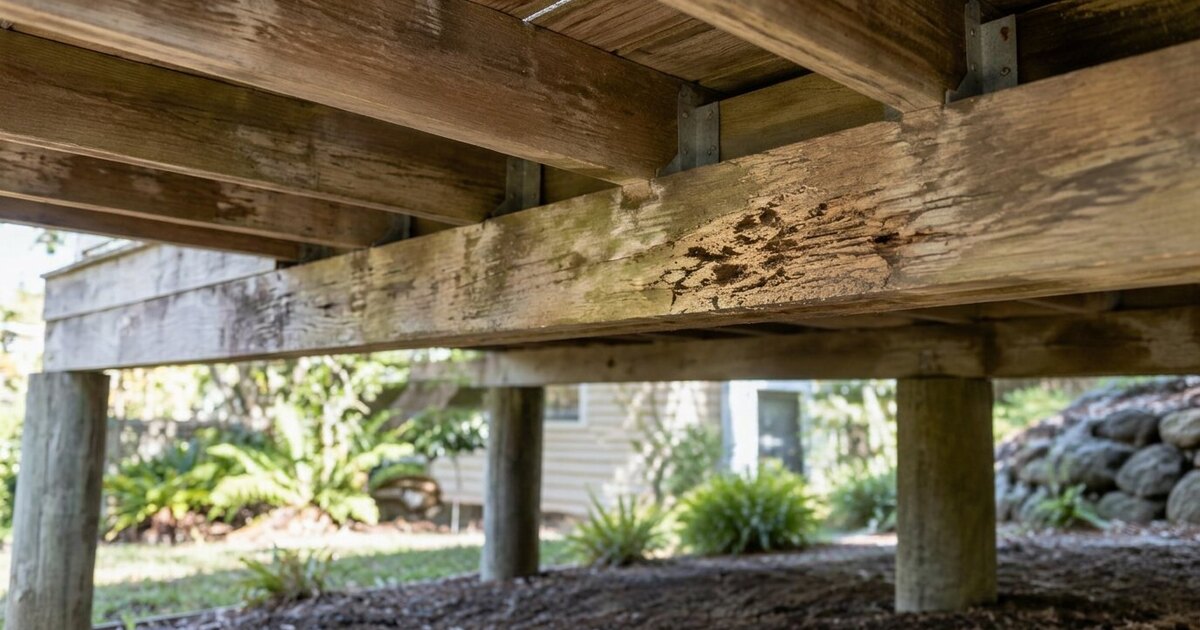
5. Substructure still matters Composite decking still requires a timber or steel frame underneath, and that structural timber remains exposed to the same moisture and pest risks as a traditional deck frame — proper ventilation and quality timber framing materials are essential in our climate.
Do You Need Council Approval for Composite Decking on the Central Coast?
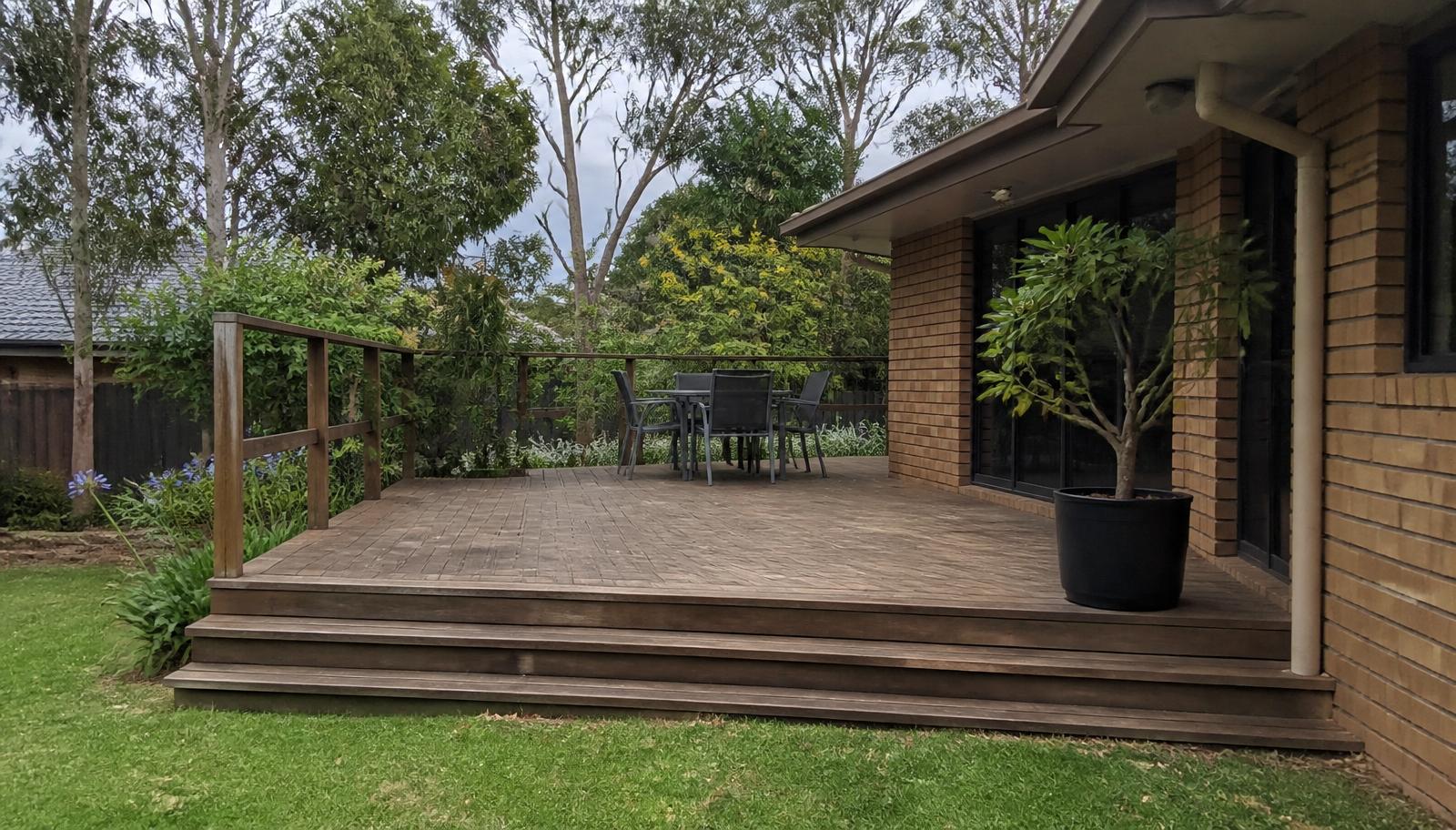
The approval pathway for composite decking is the same as for timber, since Central Coast Council and the NSW Exempt and Complying Development Codes assess decks by size, height and location rather than material. Your deck may qualify as exempt development (no approval needed) if it:
- Sits no more than 1 metre above ground level
- Covers 25m² or less in total floor area
- Is set back at least 900mm from your boundaries
- Is located behind the building line
- Isn't in a heritage, flood-prone or high bushfire risk zone (or meets AS3959 bushfire standards)
Larger, elevated or pool-adjacent composite decks will generally need a Complying Development Certificate or a full Development Application through Central Coast Council. Because much of the Central Coast includes bushfire-prone land and low-lying flood catchments around Tuggerah Lake and Brisbane Water, it's worth checking your property's zoning constraints early — a good local builder can do this for you before design work begins.
Is Composite Decking Right for Your Central Coast Home?
If you want a durable, low-maintenance deck that can handle salt air, humidity and heavy coastal rainfall without warping, rotting or requiring annual upkeep, composite decking is hard to beat. It suits busy families, holiday rentals, and homeowners who want long-term value with minimal ongoing effort. If budget is your primary concern, or you prefer the natural character of real wood, it's worth weighing composite against traditional timber decking before deciding, and thinking about how the deck ties into the rest of your outdoor living area.
Get Expert Composite Decking Advice, Local to the Central Coast
Every Central Coast property faces different sun, wind and moisture exposure, and choosing the right composite product and substructure design makes a real difference to how your deck performs over time. Contact our team today for a free consultation and quote tailored to your home and location — we build decks right across the Central Coast, from Terrigal to Woy Woy.
Related services
Ready to move from planning to build? Explore the services we cover on the Central Coast: