
Fencing Central Coast
Fencing on the Central Coast
Colorbond, timber paling, pool-compliant barriers and privacy screens built for coastal conditions.
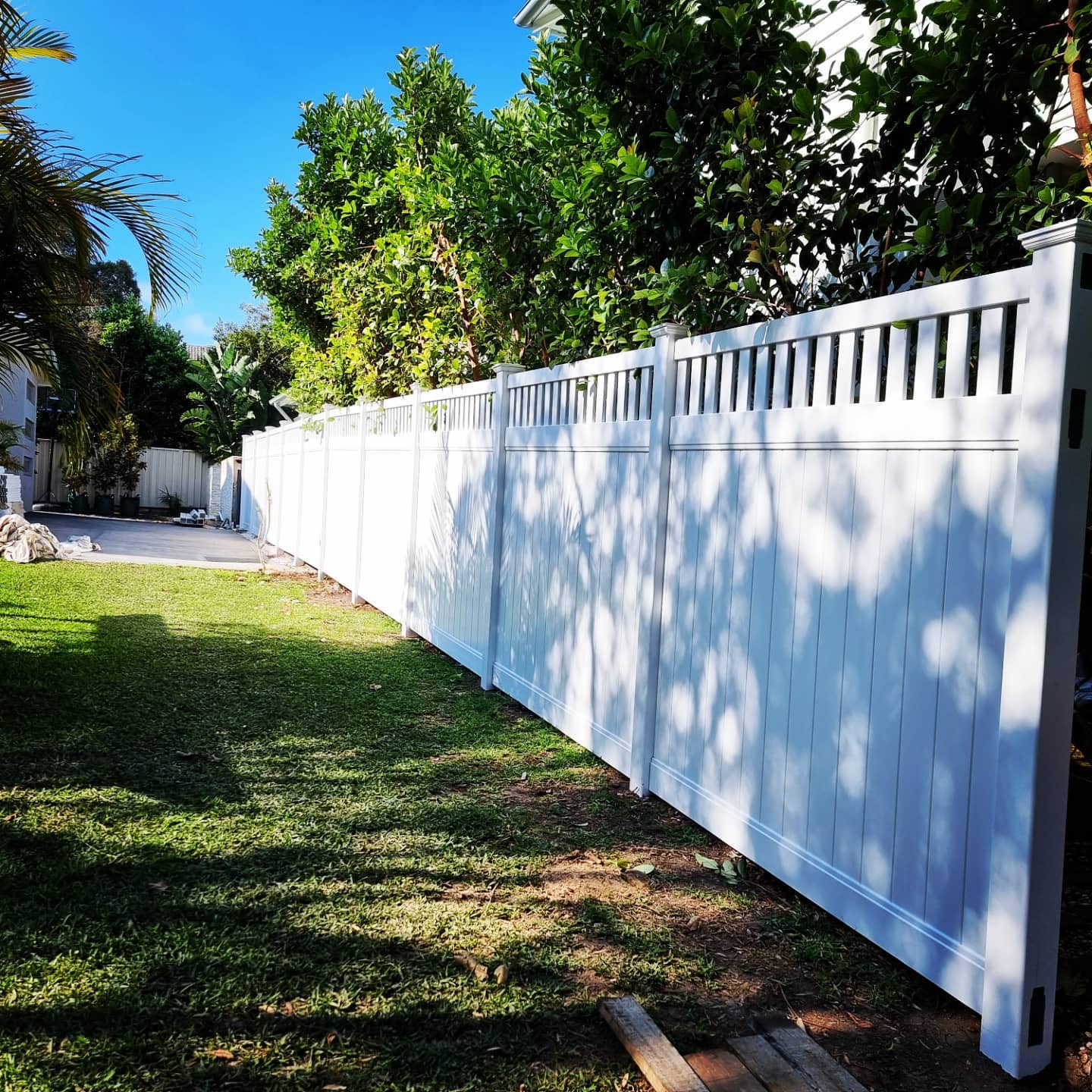
Overview
Fencing looks like the simplest job on a property until you hit one of the three things that actually complicate it: your neighbour, your pool, or the ground.
We build boundary fences, privacy screens and pool-compliant barriers across the Central Coast, on flat blocks and difficult ones, specified for a coastal environment that goes through standard hardware faster than most people expect.
What we build
Colorbond fencing The default choice for most Central Coast boundaries — low maintenance, consistent, and available in the full colour range. On a coastal block the posts and fixings matter as much as the sheeting.
Timber paling fences Traditional lapped and capped paling, in treated pine or hardwood. Still the best-value option over long runs and the easiest to repair section by section.
Pool fencing Compliant pool barriers in glass, aluminium and timber. This is the one area of fencing where getting it wrong has serious consequences — see below.
Privacy screens Slatted timber and aluminium screening for decks, courtyards, spas and boundaries. On tight blocks this often adds more usable outdoor space than square metres do.
Gates Pedestrian and vehicle gates, including self-closing and self-latching gates for pool barriers.
Feature and front fencing Timber, mixed-material and slatted front fencing where you want the boundary to do more than mark the line.
Sloping and stepped fencing Stepped and raked runs for the hillside blocks at Terrigal, Avoca, Wyoming and Kincumber, plus the retaining work that sometimes has to come first.
Rural and acreage fencing Long boundary runs, post and rail, and stock fencing for the semi-rural blocks around Lisarow, Matcham, Holgate and Ourimbah.
Pool fencing: the part people get wrong
Every swimming pool and spa in NSW capable of holding more than 300mm of water must have a child-resistant barrier complying with the Swimming Pools Act 1992, the Swimming Pools Regulation 2018, and AS 1926.1.
The core requirements:
- Internal pool fence: at least 1.2 metres high, measured from ground level on the outside
- Boundary fence used as part of the barrier: at least 1.8 metres, measured from inside the pool area
- Gaps: no more than 100mm between vertical members, and no more than 100mm between the bottom of the fence and the ground
- Gates: self-closing, self-latching, and must swing outward, away from the pool
- Non-climbable zone: a 900mm zone must be kept clear of anything climbable, with a 300mm arc measured inward from the top of the fence on the pool side
- CPR sign displayed and visible from the pool area
- The pool must be registered on the NSW Swimming Pool Register
Two things about this catch people out, and both connect directly to carpentry.
The non-climbable zone is why deck and fence work have to be designed together. A pergola post, a garden bed, a bench seat, a planter, a BBQ or a deck edge sitting within 900mm of the barrier can fail the entire pool fence — even though the fence itself hasn't changed. This is the single most common way a compliant pool becomes non-compliant, and it usually happens because someone built something nearby without thinking about it. If you are planning decking or a pergola near a pool, the two need to be designed as one job.
Modifying an existing barrier resets which rules apply. NSW applies different editions of AS 1926.1 depending on when the pool was built. But if an existing barrier is altered, modified or rebuilt, the current law and standard apply — and any exemption the old barrier relied on ceases. So a "quick repair" to an old pool fence can quietly bring the whole barrier under current requirements.
We build to these requirements. We're not accredited pool certifiers, and we'll tell you plainly that a compliance certificate has to come from Council or an accredited certifier — not from your builder. What we can do is make sure what we build won't be the reason you fail.
Who pays? The Dividing Fences Act
If the fence sits on the boundary between two properties, the Dividing Fences Act 1991 applies, and the starting position is that neighbours share the cost of a sufficient dividing fence equally.
"Sufficient" is the operative word. It means a reasonable, standard fence for that area — not the premium option one party wants. If you want something above that standard, you generally pay the difference.
The process exists for a reason: a Fencing Notice served on your neighbour sets out the proposed work and the cost, and starts the formal clock. Skipping it and just building is how fencing disputes end up at the NSW Civil and Administrative Tribunal.
One exception worth knowing: where a dividing fence forms part of a pool barrier, the Swimming Pools Act takes precedence over the Dividing Fences Act on cost-sharing.
We're not lawyers and we don't get involved in neighbour negotiations. But we will give you a clear written quote you can put in front of your neighbour, which is usually what the conversation actually needs.
Do I need council approval for a fence?
Most standard residential boundary fencing doesn't. In NSW, fences in residential zones can generally be built up to around 1.8 metres without approval, though the rules tighten for anything forward of the building line, in a heritage conservation area, or on a corner block where sightlines matter.
Rural and large-lot zones, heritage properties and front fencing are the common exceptions. If your fence is unusual in height or position, we'll check before quoting. Read our full guide to council approval on the Central Coast.
Why coastal fencing needs different hardware
A fence is mostly a set of posts and fixings holding up something flat. On the Central Coast, it's the posts and fixings that fail — not the panels.
Salt. Standard fixings in an exposed position at Blue Bay, Wamberal, Avoca Beach or The Entrance corrode faster than the manufacturer's warranty assumes. Coastal-grade fixings and properly specified post treatment are the difference between a fence that lasts and one that starts leaning at year six.
Ground conditions. On the Woy Woy peninsula, sand doesn't hold a post the way clay does, and groundwater sitting within half a metre to a metre and a half of the surface attacks anything under-treated. Post depth, footing size and treatment level all change accordingly.
Wind. Long unbroken runs of Colorbond on an exposed block take real load. Post spacing and footing depth need to reflect that, and a fence built to an inland spec on a Wamberal boundary won't hold up.
Slope. On the hillside suburbs, a fence either steps or rakes, and the choice affects both cost and how it looks. Stepped runs leave triangular gaps at the bottom unless they're detailed properly — which matters a great deal if the fence is part of a pool barrier.
Fencing across the Central Coast
We fence in Terrigal, The Entrance, Long Jetty, Gosford, Erina, Avoca Beach, Wamberal, Bateau Bay, Blue Bay, Wyoming, Tuggerah, Lisarow and every suburb in between. See all areas we service.
*General information only, current at the time of writing. Pool barrier compliance must be confirmed by Council or an accredited certifier. For dividing fence disputes, see NSW Fair Trading or your local Community Justice Centre.*
Benefits
- Colorbond, timber paling, glass and aluminium fencing
- Pool barriers built to AS 1926.1 requirements
- Coastal-grade posts, footings and fixings
- Stepped and raked runs for sloping blocks
- Free on-site quote you can show your neighbour
Common questions
- How high can I build a fence without council approval?
- In residential zones, generally up to around 1.8 metres. Front fencing, heritage conservation areas, corner blocks and rural zones have different rules. We check before quoting.
- Does my neighbour have to pay half?
- Under the Dividing Fences Act 1991, neighbours share the cost of a sufficient dividing fence equally. If you want something above the standard for the area, you generally cover the difference. Serve a Fencing Notice rather than just building — it is what protects you if there is a dispute.
- How high does a pool fence need to be in NSW?
- An internal pool fence must be at least 1.2 metres high measured from outside ground level. A boundary fence forming part of the barrier must be at least 1.8 metres, measured from inside the pool area.
- Can my deck or pergola affect my pool fence compliance?
- Yes, and this is the most common way people fail. A 900mm non-climbable zone must be kept clear of anything climbable — including deck edges, pergola posts, bench seats, planters and BBQs. Deck and pool fence should be designed together.
- Can you certify my pool fence?
- No. We build to AS 1926.1 requirements, but a compliance certificate must come from Council or an accredited certifier. Anyone who tells you their installation is the certification is wrong.
- Will repairing my old pool fence trigger current standards?
- It can. NSW applies different editions of AS 1926.1 by construction date, but altering or rebuilding a barrier brings current law into play and ends any previous exemption.
- Can you fence a sloping block?
- Yes — stepped or raked, depending on the fall and the look you want. If the fence forms part of a pool barrier, stepped runs need careful detailing at the bottom.
Helpful articles
Read before you start

Where we work
Fencing across the Central Coast, including:
Areas we service
Fencing across the Central Coast — pick your suburb for local detail.
- Fencing Gosford
- Fencing Terrigal
- Fencing Erina
- Fencing Avoca Beach
- Fencing Wamberal
- Fencing Bateau Bay
- Fencing Blue Bay
- Fencing The Entrance
- Fencing Long Jetty
- Fencing Killarney Vale
- Fencing Wyoming
- Fencing Tuggerah
- Fencing Lisarow
- Fencing Narara
- Fencing Kincumber
- Fencing Umina Beach
- Fencing Woy Woy
- Fencing Ettalong Beach
Ready to build?
Let's talk about your project.
Free, no-obligation quotes across the Central Coast. We usually respond within one business day.